Wikipedia
This chain of islands, or archipelago, developed as the Pacific Plate slowly moved northwestward over a hotspot in the Earth’s mantle at a rate of approximately 32 miles (51 km) per million years.
The Hawaiian Islands are formed by volcanic activity over a stationary hot spot in the Earth’s mantle, with the Pacific plate slowly drifting northwestward over it. This process results in a chain of islands where the oldest are in the northwest and the youngest are still forming in the southeast.
This doesn’t add up right to me, but math &I don’t get along, if you know what I mean.
😉
the youngest volcano in the chain, which lies about 35 kilometres southeast of the Island of Hawaiʻi.
over a hotspot in the Earth’s mantle at a rate of approximately 32 miles per million years.
the southeasternmost island, Hawaiʻi, is approximately 400,000 years.
The age of the archipelago has been estimated using potassium-argon dating methods. From this study and others, it is estimated that the northwesternmost island, Kure Atoll, is the oldest at approximately 28 million years ; while the southeasternmost island, Hawaiʻi, is approximately 0.4 (400,000 years). The only active volcanism in the last 200 years has been on the southeastern island, Hawaiʻi, and on the submerged but growing volcano to the extreme southeast
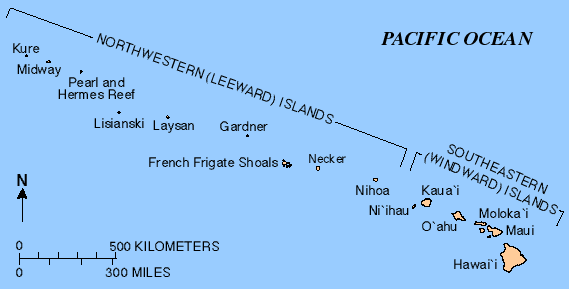
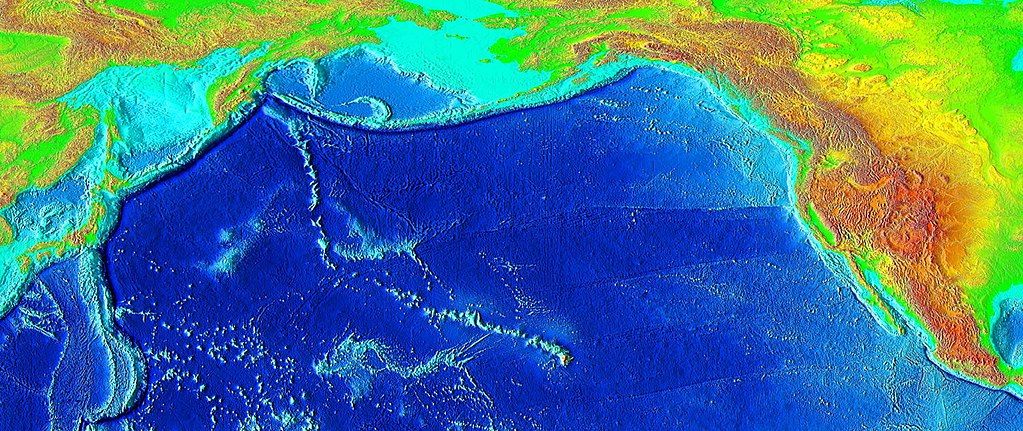
The Hawaiian–Emperor seamount chain is a mostly undersea mountain range in the Pacific Ocean that reaches above sea level in Hawaii. It is composed of the Hawaiian ridge, consisting of the islands of the Hawaiian chain northwest to Kure Atoll, and the Emperor Seamounts: together they form a vast underwater mountain region of islands and intervening seamounts, atolls, shallows, banks and reefs along a line trending southeast to northwest beneath the northern Pacific Ocean. The seamount chain, containing over 80 identified undersea volcanoes, stretches about 6,200 km (3,900 mi) from the Aleutian Trench off the coast of the Kamchatka peninsula in the far northwest Pacific to the Kamaʻehuakanaloa Seamount (formerly Lōʻihi), the youngest volcano in the chain, which lies about 35 kilometres (22 mi) southeast of the Island of Hawaiʻi.
So how does this apply to my theory.
Using the hotspot as a reference point. I think of this (& Yellowstone) as a kind of pressure relief valve. Eruptions happened where the hotspot is because the crest of the wave of liquified ? water, planet, etc. is heavier than the troughs. So it squeezes out because of gravity.
 Pac Man Impact Site Hypothesis (-17°, -107°)